

When the same drain keeps blocking, clearing it again can feel like dealing with the symptom while the underlying problem remains.
If a camera inspection reveals damaged pipework, should you reline the drain or dig it up and replace it?
The right choice depends on the damage, the condition of the surrounding pipework and access to the affected section. Relining can repair suitable drains from the inside, while replacement allows damaged sections to be removed and problems with alignment or fall to be corrected. Some properties need a combination of both.
As your local Northern Beaches plumber, Platinum Plumbers & Pipe Relining helps you understand what is happening underground and which repair makes sense for your home.
What is pipe relining?
Pipe relining repairs a damaged drain by creating a new lining inside it.
After inspection and cleaning, a resin-impregnated liner is positioned inside the section being repaired. It is then cured to form a hardened lining. The equipment and installation method depend on the system and the repair.
For suitable pipework, this can seal defects without excavating the full length of the drain.
That can be useful where a sewer runs beneath a driveway, paving or an established garden.
However, “no-dig” does not always mean no excavation. An access point may need to be installed, or a badly damaged section may require replacement before the remaining pipework can be relined.
What does pipe replacement involve?
Pipe replacement involves excavating to reach damaged pipework, removing the affected section and installing new pipe.
It does not necessarily mean replacing your entire drainage system. A short, targeted replacement may be enough to address a particular defect.
Replacement also allows the plumber to correct issues that an internal lining cannot resolve, such as a section that needs its fall, position or layout changed.
Once the work has been checked, the excavation is backfilled. Depending on the location, lawn, paving, concrete or landscaping may also need reinstatement.
When can pipe relining make sense?
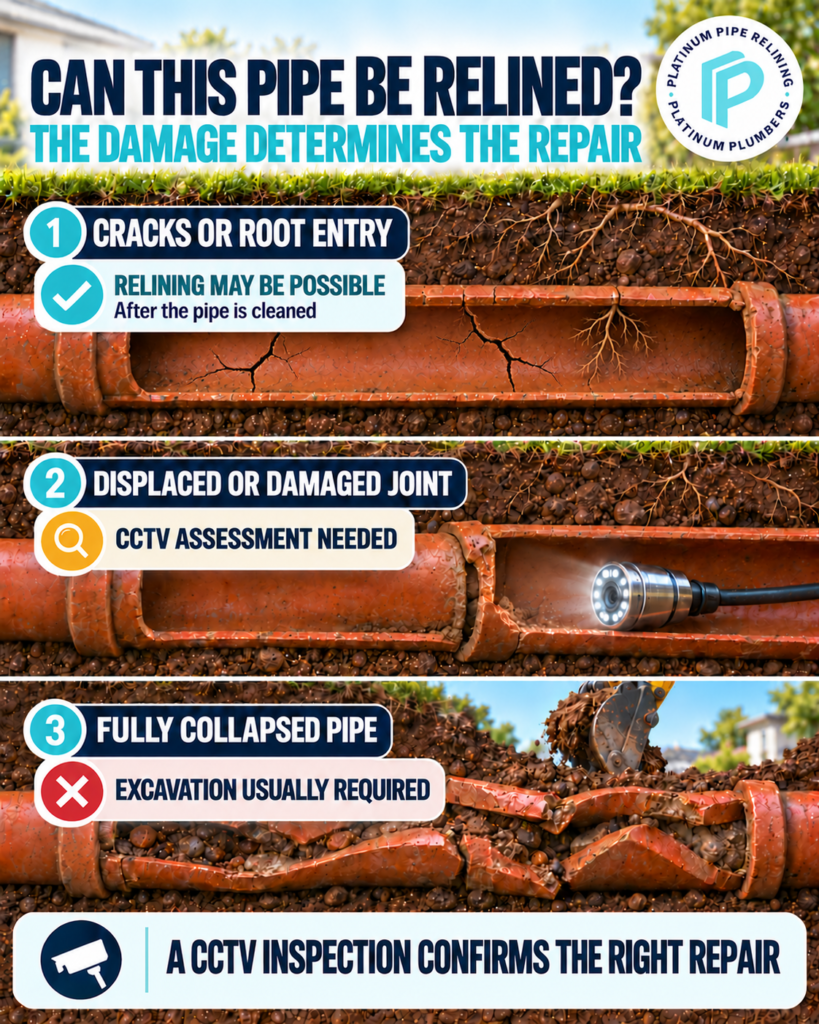
Relining may be suitable when:
-
Cracks, damaged joints or other defects can be repaired using an appropriate lining system.
-
Tree roots are entering through defects in the pipework.
-
The existing pipe’s route and shape are suitable for the proposed repair.
-
The drain can be accessed and properly prepared.
-
Excavation would disturb established gardens, paving or other finished surfaces.
A camera inspection helps establish what is happening inside the drain. Cleaning and further investigation may be needed to reveal the extent of damage and confirm a repair plan.
When is pipe replacement the better option?
Replacement may be more suitable when:
-
A section is collapsed or too deformed for a suitable liner to be installed.
-
Poor fall or significant displacement needs correction.
-
The drainage route or layout needs changing.
-
A damaged section is readily accessible for a targeted repair.
-
Renovation or excavation work has already exposed the pipework.
Relining follows the existing pipe’s shape. It should not be presented as a way to lift a sagging section or reposition a badly displaced pipe.
The significance of those defects needs assessment before a repair is recommended.
Can a drain need both replacement and relining?
Yes. Different sections of the same drainage system can need different repairs.
One component may require excavation and replacement, while another section may be suitable for relining. A combined approach can address the damage while limiting excavation elsewhere.
Why clearing tree roots may not be the end of the repair
Removing roots can restore drainage, but it does not necessarily repair the opening through which they entered.
Sydney Water explains that tree roots can enter small cracks in wastewater pipes. Its guide to wastewater blockages also explains common causes of blockages and how to identify whether a problem may be in private pipework or its network.
If your drain repeatedly blocks, the next step is to understand why. Depending on the findings, that may involve maintenance, relining, targeted replacement or a combination of works.
Not every blocked drain needs structural repairs. The recommendation should follow the investigation.
What should you ask before approving drain repairs?
A clear recommendation should answer these questions:
What is damaged?
Ask to see the camera findings and have the defect explained in plain language. You should understand where the problem is and how it affects your drain.
Why are you recommending this repair?
Ask why relining, replacement or a combined approach is appropriate. If another option is unsuitable, the plumber should explain why.
Exactly which sections will be repaired?
Understand where the repair starts and finishes, including whether junctions and connecting sections are included.
Will any digging or surface restoration be needed?
Ask where access is required and what will happen to any affected lawn, paving, concrete or garden areas.
How will the finished work be checked?
Ask what final inspection or testing is included and whether you will receive camera footage or other records.
What warranty applies?
Product warranties, workmanship warranties and expected service life are different things. Ask for the applicable terms, including coverage and exclusions.
Common questions about pipe relining and replacement
Can pipe relining fix a collapsed drain?
A fully collapsed section generally needs to be opened up and repaired before a liner can pass through it. Depending on the surrounding pipework, replacement of that section may be combined with relining elsewhere.
Can tree roots return after relining?
A correctly installed lining can seal repaired defects where roots entered. However, other damaged or unlined sections may remain vulnerable.
Ask which sections and junctions the proposed repair covers, rather than assume the entire drainage system will be protected.
Does relining reduce the pipe diameter?
Yes. The lining occupies some space inside the existing pipe.
Suitability depends on the pipe size, lining design and drainage requirements. A smoother internal surface should not be treated as a guarantee that flow will improve in every situation.
Can we use the toilet and taps during the work?
There may be periods when affected fixtures cannot be used.
Before work starts, ask which toilets, sinks, showers or appliances are affected and how long the restrictions are expected to last.
How long will the repair take?
The timeframe depends on the scope, preparation, access and site conditions.
Ask about the expected time on site, any interruption to drainage and whether surface reinstatement will happen separately.
Speak to a local Northern Beaches plumber about your drain
If you are dealing with recurring blockages or have been told your sewer needs repairing, you deserve a clear explanation of the damage and the available options.
Platinum Plumbers & Pipe Relining investigates and repairs drainage problems across the Northern Beaches and North Shore.
We can assess the pipework, explain the findings and recommend relining, replacement or a combination of repairs suited to your property.
Book a drain inspection.