
Hot water runs out faster in winter because the incoming water temperature drops, so your system has to work harder to heat the same volume of water to the same usable temperature. A 250 litre tank that comfortably covers two showers in summer might only stretch to one and a half in winter, even though nothing about the tank has changed.
That’s the normal explanation. But if your hot water is running out noticeably faster than it used to, or faster than it should for your household size, there’s usually one of a few specific causes behind it.
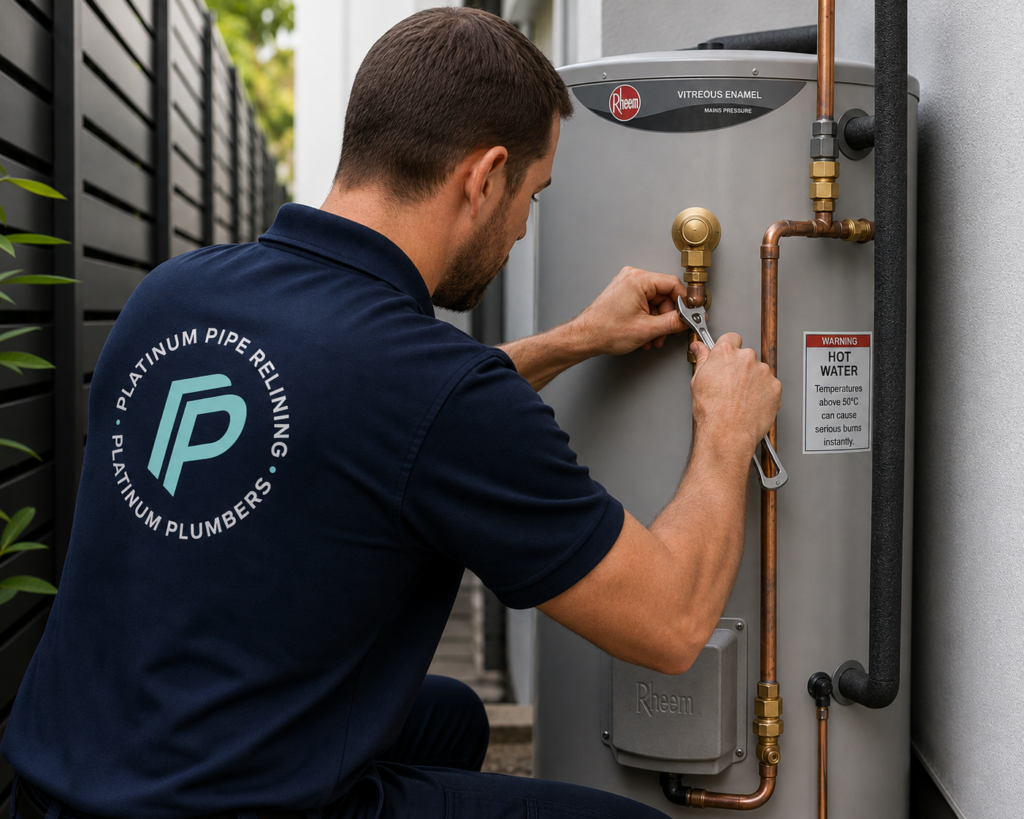
The Main Reasons Hot Water Runs Out Faster in Winter
Colder incoming water temperature. Sydney’s mains water temperature can drop several degrees in winter compared to summer. Your system isn’t heating from a lower starting point in summer, so winter simply asks more of it.
Sediment build-up in the tank. Storage tank systems that are five years or older often have sediment sitting at the bottom of the tank. This reduces the effective heating capacity and can make a tank feel undersized even if it’s the correct size for your home.
A thermostat set too low. Some systems are set conservatively for energy saving, which is fine in summer but can leave you short in winter. A licensed plumber can check whether your thermostat setting matches your household’s actual usage.
An ageing element or heat pump losing efficiency. Electric storage systems rely on a heating element that degrades over time. If your system is approaching the end of its typical lifespan, reduced winter performance is often the first sign.
Household demand has changed. More people showering, longer showers in cold weather, or a new appliance drawing hot water can all shift the math without anything being wrong with the system itself.
Storage vs Continuous Flow: Does It Make a Difference in Winter?
Storage tank systems are more exposed to winter strain because they’re heating and holding a fixed volume. Continuous flow (instantaneous) systems heat water on demand, so they don’t run out in the same way, but they can still deliver noticeably cooler water on very cold mornings if the unit is undersized for the household or if multiple outlets are running at once.
When It’s Normal vs When to Call a Plumber
A modest drop in hot water duration through winter is expected. It’s worth getting checked if:
- Hot water runs out well before the last person in the household has showered, and this is new
- The water is lukewarm rather than genuinely hot
- You hear rumbling or knocking from the tank, which can indicate sediment build-up
- Your system is 8 to 12 years old, which is around the typical end of life for many storage systems
Does a bigger hot water tank fix winter shortages?
Sometimes, but not always. If the real issue is sediment build-up or an ageing element, a bigger tank won’t solve it. It’s worth having the existing system checked before assuming you need to upsize.
Is it normal for gas hot water to run out in winter too?
Gas storage systems are less affected than electric because gas heats water faster, but they can still run short if the tank is undersized for the household or if there’s a fault in the burner or thermostat.
How long do hot water systems typically last in Sydney?
Most storage systems last 8 to 12 years, and continuous flow systems can run longer with regular servicing. Winter performance issues are often the first noticeable sign a system is approaching the end of its life.
If your hot water is running out faster than it should this winter, Platinum Plumbers services Sydney’s Northern Beaches, North Shore and Inner West, including hot water repairs, servicing, and replacements. Click here to book a licensed Plumber or call 0421 637 410 for same-day help.